September 19, 2026

Most plumbers charge between £60 and £180 to repair a toilet in the UK, covering common jobs like a running cistern, a broken flush,...

If you’re asking, “What’s the Average Plumber Call-Out Fee in London?”, here’s how call-out charges and London plumber rates typically break down.
In London, a plumber call-out fee can mean several things: a travel charge, a diagnostic fee, a first-hour minimum, or the starting cost of an urgent visit. That is why the “average plumber call-out fee london” homeowners see online can vary so much from one company to another.
For 2026, a sensible planning figure is around £100 to £120 for an emergency call-out fee , with the total first-visit emergency plumber cost in London often landing higher once labour, access, time of day, and parts are included . Checkatrade’s 2026 UK cost guide puts the average emergency plumber call-out fee at about £110, while its London emergency plumber cost data shows an average of £178, with typical London jobs starting around £131 and rising to about £245 depending on the work required. (checkatrade.com)
OnTime Plumbers London takes a more competitive approach, with emergency call-out fees starting from £49 , followed by hourly rates based on the job assessment. The company also advertises 24/7 availability, fast response, and clear upfront cost information. (api.ontimeplumbers.co.uk)
A call-out fee is the cost of getting a qualified plumber to your property. In London, that fee often covers some combination of:
The important point is that call-out charges are not always the same as the full repair price. Some plumbers charge a separate call-out fee and then add labour. Others bundle the first 30 or 60 minutes into the minimum charge. Some advertise “no call-out fee” but charge a higher hourly rate or minimum booking.
A clear plumber pricing guide should always explain what is included before you book. If it does not, ask. The cheapest-looking fee is not always the cheapest final invoice.
The call-out fee gets the plumber to your door. The final bill depends on what happens next.
For a simple job, such as tightening a leaking fitting or replacing a washer, the total may stay close to the minimum charge. For a more involved emergency plumbing service, such as a burst pipe behind a wall or a serious blocked drain, the cost can increase because the engineer needs more time, specialist tools, or replacement parts.
Typical cost components include:
This is why London plumber rates should be compared by the full pricing structure, not just the headline call-out figure.
London is not one uniform market. A plumber attending a ground-floor property in an outer borough during weekday hours is not facing the same costs as an emergency engineer crossing central London at midnight.
The main factors that affect call-out charges include:
Evenings, nights, weekends, and bank holidays often cost more because fewer engineers are available and response demand is higher. Some firms apply an out-of-hours multiplier. Others keep a consistent emergency structure but may still charge a higher minimum for urgent work.
A same-day or immediate emergency plumber cost is usually higher than a scheduled appointment. If you need someone within 30 to 60 minutes, you are paying for availability, dispatch, travel, and the chance that the engineer may need to rearrange other work.
Central London parking, flats with limited access, controlled entry buildings, basements, loft tanks, commercial premises, and busy roads can all add time. Even when the plumbing repair itself is straightforward, access can affect labour.
A dripping tap is very different from a burst pipe, sewage backflow, or no heating in winter. Higher-risk jobs require faster triage and sometimes more specialist skills.
If the engineer can repair the issue with standard van stock, the job may stay simple. If a specific boiler part, tap cartridge, macerator component, or drainage part is needed, the plumber may need a return visit.
Water plumbing, drainage, and gas work are not interchangeable. If the job involves gas appliances, boilers, or gas pipework, you need a Gas Safe registered engineer, not just a general plumber. GOV.UK states that the Gas Safe Register is the official UK list of gas engineers, and UK law requires businesses carrying out domestic or commercial gas work to be registered. (regulated-professions.service.gov.uk)
Not every plumbing issue needs an emergency call-out. However, delaying the wrong problem can lead to property damage, safety risks, or higher repair costs.
Call an emergency plumber if you have:
If you smell gas or suspect a gas or carbon monoxide emergency, call the National Gas Emergency Service on 0800 111 999 before arranging repair work. (nationalgas.com)
You may be able to avoid emergency call-out charges if the issue is contained and safe. A standard booking may be enough for:
If you are unsure, describe the symptoms clearly when you call. A good plumber will help you decide whether the job is urgent or whether a scheduled visit will save money.
OnTime Plumbers London is a highly rated 24/7 emergency plumbing service, tracking a 4.9-star rating and specialising in fast-response repairs for burst pipes, blocked drains, and Gas Safe boiler installations.
Its emergency call-out fee starts from £49 , with hourly rates applied after the job has been assessed. The company’s website also states that it aims to respond quickly, operates around the clock, and provides cost information upfront. (api.ontimeplumbers.co.uk)
That starting fee is useful for customers who want a lower entry point than the typical London emergency average. However, as with any emergency plumbing service, the final price depends on the time on site, complexity of the fault, parts required, and whether specialist work is needed.
Before confirming an emergency plumber London visit, ask these questions:
These questions help you compare like for like. A £49 call-out with transparent hourly rates may be better value than a “free call-out” with a high minimum charge, but you need the full picture before deciding.
Pricing language matters. Citizens Advice explains that a quote is an agreed fixed price, while an estimate is a trader’s best guess. If you have agreed a quote, the trader generally cannot charge more unless there is a valid reason, such as extra work that you agreed to.
For emergency plumbing, many jobs begin with a call-out and diagnosis rather than a fixed quote, because the engineer may not know what is behind a wall, under a floor, or inside a blocked drain until they inspect it. Still, you should be told the attendance fee, hourly rate, and likely next steps before work begins.
If a plumber discovers extra work is needed, ask for the price before they continue. A professional engineer should be able to explain the issue in plain English and confirm what is urgent versus what can be booked later.

For boiler repairs, boiler installations, gas leaks, or gas pipework, use a Gas Safe registered engineer. The Health and Safety Executive says consumers can use the Gas Safe Register to find local registered engineers and check an engineer’s licence number and qualifications. (hse.gov.uk)
For water plumbing, WaterSafe is a useful way to find approved contractors. WaterSafe says approved plumbers are trained in UK Water Fittings Regulations and Byelaws, and its London register helps customers find approved plumbers in the area. (watersafe.org.uk)
People who search for “Gas Safe Registered plumbier london” or “emergency plumbier london” are usually looking for the same thing: a qualified, verified professional who can attend quickly and work safely. The spelling matters less than the checks you make before letting anyone work on your home.
Burst pipes are among the most urgent plumbing call-outs because water damage can spread quickly. The plumber may need to isolate the supply, cut out damaged pipework, install a temporary or permanent repair, and check nearby fittings.
The cost depends on where the pipe is located, how easy it is to access, and whether flooring, boxing, ceilings, or cupboards restrict the repair.
A blocked sink or toilet may be quick if the blockage is near the trap. A deeper blockage in a soil stack, external drain, or shared drainage run may require mechanical cleaning, drain rods, or CCTV inspection.
Ask whether drainage equipment is included in the hourly rate or charged separately.
Boiler faults can range from a simple pressure issue to a failed component. If the work involves opening the boiler casing or working on gas-related parts, it must be handled by a Gas Safe registered engineer.
A general plumber may be able to help with radiators, valves, or visible water leaks, but gas boiler work needs the right registration and competence.
These jobs are often cheaper when booked as non-emergencies, especially if the leak can be isolated. The price depends on whether standard parts fit or whether a specific cartridge, valve, flush mechanism, or concealed component is needed.
Trace-and-access work can take longer than the actual pipe repair. The plumber may need to locate the leak, open a small section for access, repair the pipe, and advise on drying or reinstatement.
You can often limit damage and reduce time on site by taking a few safe steps:
The clearer the information, the faster the diagnosis.
Most London plumbers are legitimate professionals, but emergency situations can make customers vulnerable. Be cautious if a company:
A trustworthy plumber will be clear about call-out charges, labour rates, and what happens if the job needs parts or further investigation.
As a practical plumber pricing guide for London, expect the following:
The best value is not always the lowest call-out fee. It is the clearest combination of fast response, qualified engineers, fair hourly rates, safe workmanship, and transparent invoicing.
If you have a burst pipe, blocked drain, leak, or urgent boiler issue, OnTime Plumbers London can help. The team operates 24/7, offers fast-response emergency plumbing support, and starts emergency call-out fees from £49.
For urgent help, contact OnTime Plumbers London and ask for clear pricing before the engineer is dispatched. A calm, transparent conversation at the start can save stress, time, and money when every minute matters.
Question: How much should I budget for an emergency plumber call-out in London in 2026?
Short answer: Plan for around £100–£120 as a typical emergency call-out fee, but expect the total first-visit cost to be higher once labour, time of day, access, and parts are added. Market guides put the UK emergency call-out average near £110, with London emergency visit totals averaging about £178 and commonly ranging from roughly £131 to £245 depending on the job. Some providers, like OnTime Plumbers London, advertise lower entry fees starting from £49, then charge hourly based on the assessment.
Question: What does a plumber’s call-out fee actually cover?
Short answer: It’s the cost to get a qualified engineer to you and typically includes travel, initial attendance and inspection, diagnosis, and sometimes basic isolation or a first portion of labour—depending on the company. It is not the full repair price. Some firms separate the call-out from labour, others bundle the first 30–60 minutes, and some offer “no call-out fee” but set a higher hourly minimum. Always confirm what’s included before booking.
Question: Why do London plumber rates vary so much between companies and jobs?
Short answer: Prices reflect operational realities and job complexity. Key drivers include time of day (out-of-hours costs more), response speed (immediate dispatch carries a premium), location and access (parking, flats, basements add time), type of emergency (burst pipes vs dripping taps), parts and materials (standard van stock vs special-order components), and required qualifications (e.g., Gas Safe for boiler/gas work). Don’t forget VAT, parking, congestion, or disposal fees, which may be extra.
Question: When should I call an emergency plumber, and when can I wait?
Short answer: Call urgently for a burst pipe, uncontrolled leaks, water through ceilings, sewage backing up, a single usable toilet that’s blocked, leaks near electrics, no heat/hot water affecting vulnerable people, or a stopcock that won’t turn off. You can often wait (and avoid emergency rates) for slow-dripping taps, minor isolatable radiator leaks, a blocked sink with alternatives, non-urgent toilet repairs, planned replacements, servicing, or low pressure without damage. For suspected gas or carbon monoxide, call 0800 111 999 before arranging repairs.
Question: How can I avoid surprise costs and keep the bill down?
Short answer: Before booking, ask: the call-out fee, what time is included, hourly rate after that, minimum charge, out-of-hours rates, whether VAT/parking/congestion are included, and how parts are billed; request a clear, itemised invoice and, for gas work, a Gas Safe engineer. Before the engineer arrives, safely isolate water, protect belongings, contain leaks, clear access, and describe symptoms clearly. Be wary of firms that won’t confirm rates upfront, pressure you, add unexplained extras, or can’t prove credentials.
Most plumbers charge between £60 and £180 to repair a toilet in the UK, covering common jobs like a running cistern, a broken flush,...
Yes. London has genuine 24-hour emergency plumbing cover, including services like OnTime Plumbers, which operates around the clock across Greater London, Essex, Hertfordshire, and...
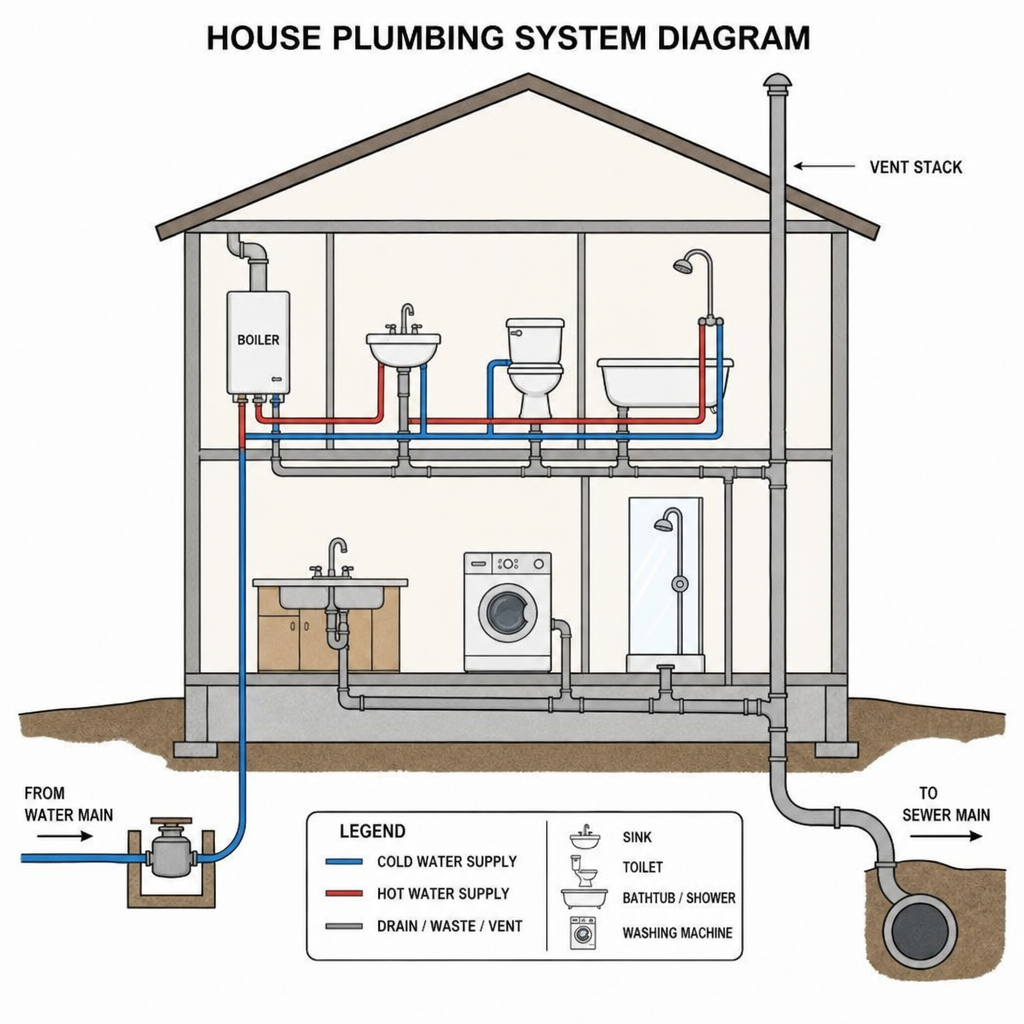
A house plumbing system brings clean mains water into the property, heats and distributes it where needed, then removes wastewater safely through traps, waste...