
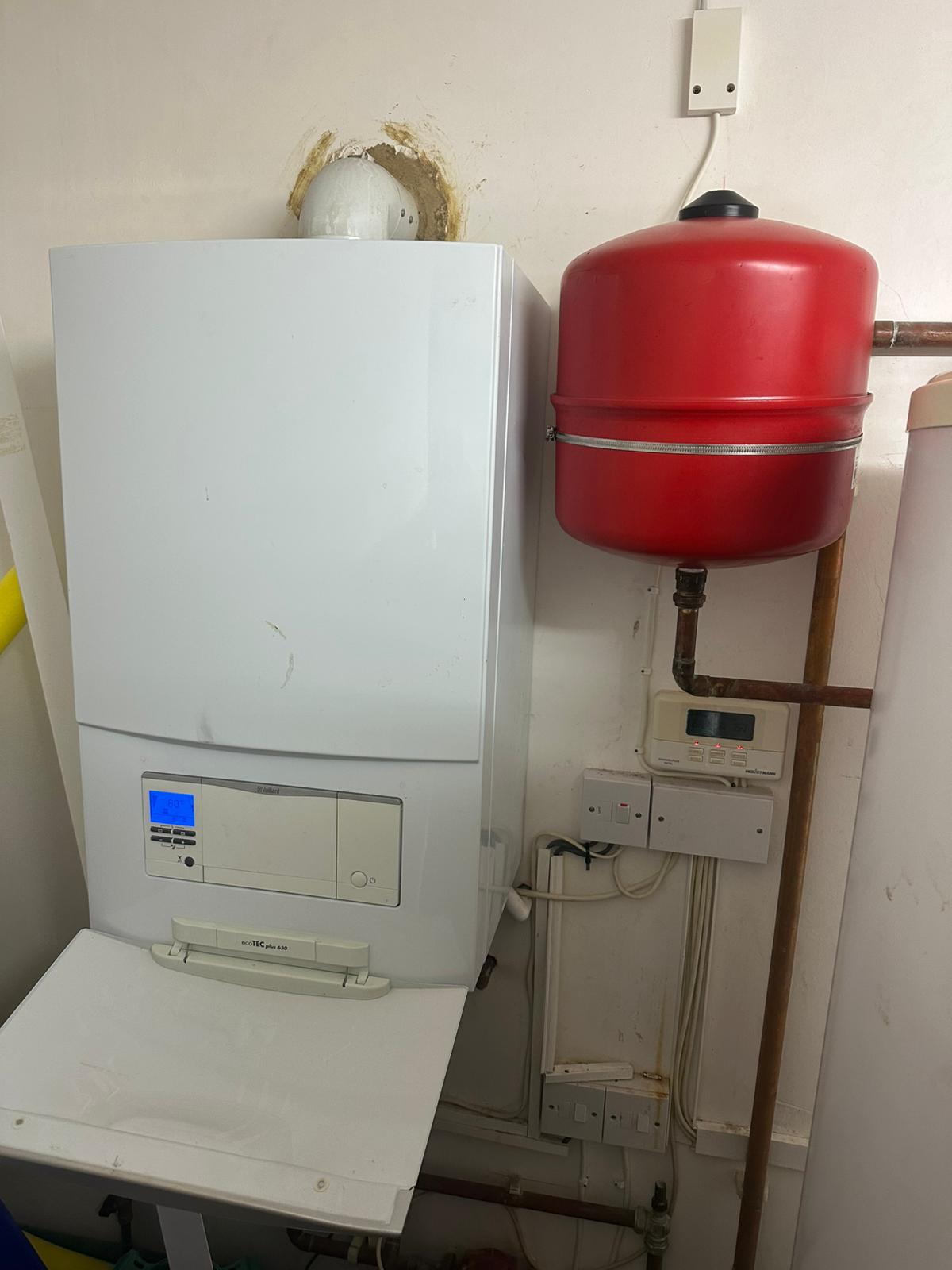
What Is a Combi Boiler? A Complete Guide
a combi (combination) boiler is a single unit that provides both central heating and hot water on demand, without needing a separate hot water cylinder or cold water storage tank. When you turn on a hot tap, the boiler heats water directly from the mains, in real time, rather than drawing it from a pre-heated tank. It’s the most commonly installed boiler type in UK homes, largely because it’s compact, doesn’t need loft or airing cupboard space, and gives unlimited hot water as long as the tap is running.
That’s the short version. Below we’ll go through how a combi actually works, how it compares to system and conventional boilers, what size you’d realistically need, and where combis fall short — because they’re not the right fit for every property, whatever the installation stats suggest.
How Does a Combi Boiler Work?
A combi boiler is connected directly to your mains cold water supply and gas supply. It does two separate jobs from inside the same casing:
- Central heating: it heats water and circulates it through a sealed loop to your radiators (and underfloor heating, if fitted), then draws the cooled water back to reheat — a closed system, topped up occasionally rather than constantly refilled.
- Hot water on demand: when you open a hot tap or start a shower, a flow sensor inside the boiler detects the water movement and fires the burner. A heat exchanger — usually a plate heat exchanger — heats the mains water as it passes through, and it comes out the tap hot within seconds. When you turn the tap off, the burner stops. There’s no tank of water sitting pre-heated and waiting.
This is the defining feature of a combi: hot water is generated in real time, not stored. It’s why combis don’t run out of hot water the way a tank-fed system can if several baths are run back-to-back — but it also means output is limited by how fast the boiler can heat water passing through it, not by tank capacity. That trade-off matters more than most buying guides make clear, and it’s the main thing to understand before choosing one.
Combi Boiler vs. System Boiler vs. Conventional Boiler
This is one of the most common points of confusion, so it’s worth being precise about what separates the three main boiler types fitted in UK homes.
| Feature | Combi Boiler | System Boiler | Conventional (Regular) Boiler |
|---|---|---|---|
| Hot water cylinder needed | No | Yes | Yes |
| Cold water tank in loft needed | No | No | Yes |
| Hot water supply | On demand, unlimited duration | Stored, can run out under heavy use | Stored, can run out under heavy use |
| Multiple outlets at once | Can struggle with pressure drop | Handles multiple outlets well | Handles multiple outlets well |
| Space required | Least — no tank or cylinder | Cylinder needed, but no loft tank | Most — cylinder plus loft tank |
| Best suited to | Flats, smaller homes, 1–2 bathrooms | Larger homes, 2+ bathrooms, higher demand | Older properties, homes with poor mains pressure |
| Installation complexity (replacement) | Simplest if already a combi | Moderate | Moderate to complex |
The practical difference that actually matters: a system boiler stores hot water in a cylinder, so it can supply two showers running simultaneously at full pressure without either one dropping off — something a combi genuinely struggles with. A conventional boiler goes further and also needs a cold water storage tank in the loft, feeding the system by gravity, which is largely a legacy of older properties and low mains pressure areas rather than a design choice anyone actively picks today.
What Does “Combi” Actually Mean on a Boiler?
“Combi” is short for combination boiler — the combination being central heating and hot water production combined into one unit, rather than requiring a separate boiler for heating and a separate immersion or cylinder setup for hot water, as was common in older UK housing stock before combis became widespread from the 1990s onward.
Advantages of a Combi Boiler
- Compact. No cylinder, no tank — useful in flats and smaller properties where airing cupboard or loft space is limited or non-existent.
- Unlimited hot water duration. As long as the tap runs, hot water keeps coming, as opposed to a fixed cylinder capacity running out mid-bath.
- Faster, simpler installation for a like-for-like swap. Because there’s no cylinder or tank to remove or install, replacing an existing combi with a new one is usually the quickest and least disruptive boiler job available.
- No risk of tank freezing or leaking in the loft, since there isn’t one.
- Generally efficient for smaller households, since water is only heated when actually needed — there’s no standing cylinder losing heat overnight.
Disadvantages of a Combi Boiler
- Struggles with simultaneous high demand. Run a shower and a bath tap at once and you’ll likely notice a drop in pressure or temperature at one of them — this is a genuine physical limitation, not a fault.
- Output is capped by flow rate, not storage. A combi can only heat water as fast as its heat exchanger allows; it’s a common misconception that a bigger combi solves this in the way people expect (see the sizing section below).
- No backup if the boiler fails. With a cylinder system, you can sometimes still draw stored hot water for a while if the boiler itself has an issue. With a combi, if the unit’s down, both heating and hot water go with it.
- Not always ideal for larger households. A family home with two or three bathrooms and frequent simultaneous use is often better served by a system boiler.
Can a Combi Boiler Run Heating and Hot Water at the Same Time?
Yes, but with a caveat. Most modern combi boilers prioritise hot water over heating — so if you turn on a hot tap while the heating is running, the boiler will typically divert its output to hot water first, and central heating output may pause or reduce slightly until the tap is turned off. This is normal, intentional behaviour on almost every combi on the market, not a fault.
What Size Combi Boiler Do I Need?
Combi boiler output is measured in kilowatts (kW), and sizing is one of the areas where we see the most getting-it-wrong on properties we’re called out to. As a general starting point:
- 24–28kW: flats and smaller homes with one bathroom
- 28–34kW: typical three-bedroom homes with one bathroom, moderate demand
- 35kW+: larger homes with two or more bathrooms, higher simultaneous hot water demand
But kW output isn’t really about how big the house is to heat — modern homes rarely need that much power for radiators alone. It’s the hot water flow rate that usually drives sizing decisions on a combi, because that’s the figure that determines how many litres per minute the boiler can heat to a usable temperature. A boiler sized on square footage alone, without a proper flow-rate and heat-loss calculation, is a common cause of underwhelming hot water performance in an otherwise correctly installed system.
Bigger isn’t automatically better. An oversized combi doesn’t give you meaningfully better hot water beyond a certain point, and can short-cycle on the heating side — firing up and shutting off repeatedly rather than running a longer, steadier, more efficient burn. Proper sizing should come from an installer doing a heat-loss calculation and checking your incoming mains flow rate, not from picking the biggest number on the shelf.
Are Combi Boilers Energy Efficient?
Modern condensing combi boilers sold in the UK are required to meet minimum efficiency standards under the ErP (Energy-related Products) Directive, and the large majority achieve efficiency ratings in the low-to-mid 90% range under standard test conditions — meaning most of the gas burned converts directly into usable heat rather than being lost through the flue.
Because a combi only heats water when there’s actual demand — no cylinder sitting warm overnight — they tend to be efficient for smaller households with lower, more sporadic hot water use. Real-world efficiency also depends heavily on flow temperature settings, system design, and how well the boiler is serviced; an efficiently rated boiler running with the wrong flow temperature or a scaled heat exchanger won’t perform to its rated figure in practice.
How Long Does a Combi Boiler Last?
Most manufacturers design combi boilers with an expected working life of around 10 to 15 years, with many well-maintained units running longer. Actual lifespan depends heavily on water quality, system cleanliness (limescale and sludge are the two biggest shorteners of boiler life), and whether it receives an annual service. A boiler that’s never been serviced and is running in a hard water area without a scale inhibitor fitted will typically show performance and efficiency decline well before that 10–15 year mark.
How Much Does a Combi Boiler Cost?
Fully installed, a new combi boiler in the UK typically costs £1,800 to £3,500, with a straightforward like-for-like swap (same boiler type, same location) sitting toward the lower end of that range and premium brands, conversions from another boiler type, or more complex pipework pushing costs higher. London and the South East tend to run somewhat above the national average due to labour costs. A proper quote should include the unit, flue and fittings, removal and disposal of the old boiler, labour, commissioning, and your Gas Safe certificate — if a quote looks unusually cheap, it’s worth checking what’s been left out.
When Combi Isn’t the Right Choice
A combi is the right call for a large share of UK properties, but not all of them. It’s generally worth considering a system or conventional boiler instead if:
- You have two or more bathrooms with a habit of simultaneous use (morning showers plus a bath running, for example)
- Your mains water pressure is naturally low, which limits how well any combi will perform regardless of sizing
- You’re in a larger property where hot water demand regularly exceeds what a combi’s flow rate can comfortably deliver
This is exactly the kind of decision that’s worth a proper site visit rather than a guess from a spec sheet — pipework, existing system type, and mains pressure all affect which boiler type will actually perform well in your specific property.
Getting a Combi Boiler Installed, Serviced or Repaired
If you’re weighing up a new combi installation, a straight replacement, or you’ve got questions about whether your current boiler is the right size for your home, our boiler installation team can carry out a proper heat-loss and flow-rate assessment rather than sizing off a guess. If your existing combi is losing efficiency, short-cycling, or just due its annual check, boiler servicing covers the maintenance that keeps a combi running close to its rated efficiency for its full working life. And if your combi’s gone down completely — no heating, no hot water, nothing — our 24/7 emergency plumbers are Gas Safe registered and cover London around the clock.
FAQs
What is a combi boiler?
A combi (combination) boiler is a single unit that provides both central heating and hot water on demand, heating mains water directly as it’s needed rather than storing it in a separate cylinder or tank.
How does a combi boiler work?
It’s connected to the mains gas and cold water supply. Opening a hot tap triggers a flow sensor, which fires the burner and heats water as it passes through a heat exchanger, delivering hot water in real time.
What is the difference between a combi boiler and a regular boiler?
A combi has no separate hot water cylinder or cold water tank — everything happens within one unit, on demand. A regular (conventional) boiler stores hot water in a cylinder and typically needs a cold water tank in the loft too.
Do combi boilers need a water tank?
No. This is one of their main advantages — no loft tank and no hot water cylinder are required, which frees up space and removes the risk of tank leaks or freezing.
Can a combi boiler provide hot water and heating at the same time?
Yes, though most combis prioritise hot water when a tap is running, so heating output may briefly reduce until the tap is turned off.
Are combi boilers good for large houses?
They can work well in larger homes with a single bathroom and moderate demand, but homes with two or more bathrooms and frequent simultaneous hot water use are often better suited to a system boiler.