November 9, 2026

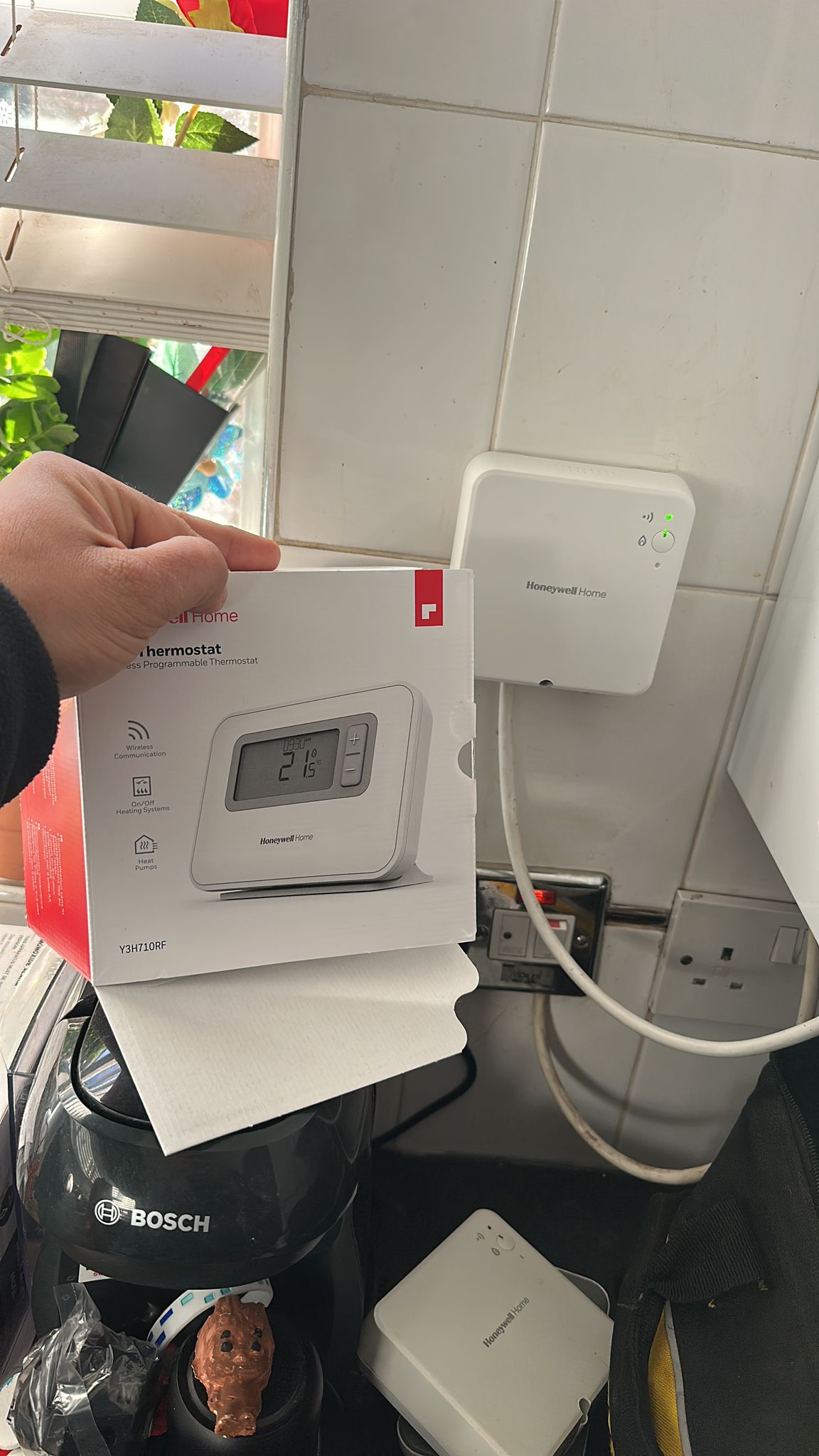
A combi boiler should have room-temperature control alongside a heating schedule, usually provided by a room thermostat and timer or one programmable controller. The...
When your boiler breaks down, deciding whether to repair it or install a new one can be difficult. A repair may seem like the cheaper option, but if your boiler is old, inefficient or frequently breaking down, replacing it could offer better value over time.
In most cases, repairing a boiler is cheaper in the short term, while replacing it may be more economical in the long term if the appliance has serious faults, needs repeated repairs or is approaching the end of its useful life.
The right decision depends on several factors, including the boiler’s age, the cost of the repair, its condition, the availability of replacement parts and the price of installing a new appliance.
In this guide, we’ll compare boiler repair and replacement costs, explain when each option makes financial sense and help you decide what to consider before spending money on your heating system.
There isn’t one answer for every household. A relatively inexpensive repair on a boiler in good condition will usually cost less than replacing the entire appliance.
However, if your boiler has developed a major fault or requires frequent repairs, continuing to pay for maintenance may become more expensive than installing a replacement.
Consider these general situations:
| Situation | Usually the more economical option |
|---|---|
| A minor fault on a relatively modern boiler | Repair |
| A boiler covered by a valid warranty | Check warranty repair first |
| An older boiler with one inexpensive fault | Compare repair and replacement quotes |
| Frequent breakdowns and increasing repair bills | Consider replacement |
| Major component failure with expensive parts | Compare both options carefully |
| Boiler declared unsafe or beyond economical repair | Replacement may be necessary |
These are general guidelines, not a diagnosis. A qualified heating engineer should inspect the appliance before recommending either option.
The cost of repairing a boiler depends on the fault, the parts required, labour, the boiler’s make and model, and where you live.
Some problems are relatively straightforward to resolve. Others involve expensive components or require more extensive investigation.
Common boiler repair issues include:
The exact repair price cannot be established until the fault has been diagnosed.
Before approving work, ask the engineer for a written quotation explaining the diagnosis, parts, labour and any applicable guarantee.
If your boiler is still under warranty, check whether the manufacturer will cover the repair before paying for it yourself.
Replacing a boiler involves more than purchasing the appliance. The total installation price depends on the type of boiler, the size of your property, the existing heating system and the amount of work required.
The Energy Saving Trust gives an indicative average cost of approximately £3,500 for replacing a G-rated gas boiler with an A-rated model, including thermostatic radiator valves. Your actual quotation may be higher or lower depending on the installation.
Factors that can affect the price include:
For an accurate estimate, arrange an assessment rather than relying on a general online price.
When comparing quotations, check whether each one includes the same work. A cheaper quotation may not include important items such as removal of the old appliance, system cleaning, controls or warranty arrangements.
Repairing your existing boiler is often the better financial decision when the appliance is in reasonable condition and the fault is relatively minor.
Here are some situations where repair may make more sense.
If your boiler is relatively modern and has been maintained properly, repairing a single faulty component may be more economical than replacing the entire system.
Many newer boilers also have manufacturer warranties. Before paying for a repair, check whether the problem is covered by the warranty and whether the servicing requirements have been met.
If an engineer identifies a straightforward fault and provides a reasonable quotation, repair may be the sensible option.
For example, replacing a relatively inexpensive component on a boiler that otherwise works properly is unlikely to justify the cost of a complete replacement.
Ask the engineer whether the repair is likely to resolve the problem and whether there are other signs of deterioration.
A boiler that has operated reliably for years and has only developed an isolated fault may still have useful service life remaining.
If the appliance is safe, parts are available and the repair is reasonably priced, there may be little financial benefit in replacing it immediately.
A valid manufacturer’s warranty may cover certain parts and labour costs.
Check the warranty documents carefully because coverage varies. Some warranties require annual servicing by a suitably qualified professional.
You should also check whether you have boiler insurance or home emergency cover before paying for work.
Although repair is often cheaper initially, there are situations where replacement may provide better long-term value.
Repeated breakdowns can make an older boiler expensive to maintain.
If you are regularly paying for call-outs, replacement parts and labour, add these expenses together before deciding what to do next.
A new boiler may reduce the likelihood of further age-related repair problems, although no appliance is completely free from maintenance requirements.
Some faults involve expensive components or extensive work.
If the repair quotation is high relative to the cost of a suitable replacement, it is worth comparing both options.
Ask the engineer whether the appliance is likely to need additional work in the near future. A major repair may not be good value if other components are also deteriorating.
Older or discontinued boiler models may have limited parts availability.
If a required component is no longer available, or sourcing it makes the repair impractical, replacing the appliance may be the more realistic option.
A boiler that frequently loses pressure, struggles to provide consistent heating or repeatedly develops faults may need a more thorough assessment.
These symptoms do not automatically mean the boiler needs replacing. However, if the underlying problems are extensive, replacement could be more economical than continuing to repair it.
Safety must come before cost.
If a Gas Safe registered engineer identifies a serious safety issue and determines that the appliance cannot be made safe through an appropriate repair, it should not continue to be used.
Follow the engineer’s advice and arrange a suitable replacement where necessary.
Yes. Boiler age is an important consideration, but it should not be the only factor influencing your decision.
An older boiler may have more worn components, limited parts availability and a higher likelihood of developing faults. However, a well-maintained older appliance with an inexpensive repair may still be worth keeping.
Similarly, a relatively new boiler may need replacement if it has suffered serious damage or cannot be repaired safely.
Rather than following a strict age rule, consider:
A professional inspection can help establish whether your boiler is worth repairing.
It may, particularly if you are replacing an older, inefficient appliance with a suitable modern condensing boiler.
However, the savings depend on your existing boiler, how much gas you use, your heating controls, insulation and household heating habits.
There is an important distinction between older non-condensing boilers and modern condensing models.
A modern condensing boiler is designed to recover additional heat from its exhaust gases. If your existing boiler is already a reasonably efficient condensing model and works correctly, replacing it may produce relatively modest fuel savings.
This means you should not assume that buying a new boiler will automatically pay for itself through lower energy bills.
Before deciding, consider the replacement cost alongside any realistic energy savings and the repair costs you expect to avoid.
You can find further information about boiler efficiency and replacement costs in the Energy Saving Trust’s boiler guidance.
Imagine a homeowner has an older boiler that has recently stopped working.
An engineer diagnoses a fault and provides a repair quotation. However, the boiler has also experienced several breakdowns over the previous two years.
The homeowner now has two options:
Option A: Repair the existing boiler
Option B: Replace the boiler
The cheapest immediate option may be repair. However, if the boiler is likely to require further expensive work, replacement could offer better value over several years.
The important point is to compare actual quotations rather than make the decision based only on the boiler’s age or one repair bill.
Before making a decision, work through these steps.
Do not assume that a boiler needs replacing because it has stopped working.
A qualified engineer should identify the cause of the problem and explain whether it can be repaired safely.
Look through your boiler warranty, home emergency cover and any boiler insurance policies.
You may be entitled to a covered repair or other assistance, depending on the terms.
The quotation should explain:
If the repair is expensive or the boiler has a history of breakdowns, ask for a separate replacement quotation.
Make sure the quotation explains the appliance, installation work, controls, warranty and any additional costs.
Do not compare only the repair price with the new boiler’s purchase price.
Consider the following:
This gives you a more realistic picture of the financial decision.
If you rent your home, contact your landlord or letting agent when the boiler develops a problem.
In England, landlords generally have responsibilities for keeping installations for heating and hot water in repair under the Landlord and Tenant Act 1985, subject to the applicable tenancy arrangements and legal requirements.
Tenants should not attempt to repair or replace gas appliances themselves.
If you are a landlord, a repair or replacement decision should consider safety, the condition of the appliance, the cost of the work and the need to maintain a reliable heating and hot water supply.
For more information about your rights and responsibilities, see Citizens Advice’s guidance on getting a broken boiler repaired or replaced.
Regular maintenance can help identify developing problems before they become more serious.
Consider these practical steps:
An annual service does not guarantee that a boiler will never break down, but it gives a qualified engineer an opportunity to inspect the appliance and identify potential concerns.
If your boiler is unreliable, repeatedly breaking down or no longer providing dependable heating and hot water, it is worth arranging a professional assessment before deciding whether to repair or replace it.
OnTime Plumbers provides plumbing and heating services in London. An assessment can help establish the nature of the fault, whether a repair is practical and what options may be available if replacement is the better choice.
Explore our boiler repair services in London if your existing appliance has developed a fault.
If you are considering a new appliance, find out more about our boiler replacement services.
You can also explore our boiler installation and repair services or contact OnTime Plumbers to discuss your requirements.
The right decision should be based on the boiler’s condition, the repair quotation and the long-term cost of keeping your heating system reliable.
Repairing is usually cheaper in the short term, especially when the boiler has a minor fault and is otherwise in good condition. Replacement may offer better long-term value if the appliance has repeated breakdowns, major faults or expensive repair requirements.
There is no single age at which every boiler must be replaced. Age, condition, reliability, repair costs, parts availability and safety all matter. Ask a Gas Safe registered engineer to assess the appliance before making a decision.
It can be, if the boiler is safe, the fault is relatively inexpensive and suitable parts are available. However, if it has frequent breakdowns or needs a costly repair, comparing the price of replacement is sensible.
The cost depends on the boiler model and the fault. Major components such as a heat exchanger or printed circuit board can involve significant parts and labour costs. Get a diagnosis and written quotation before deciding whether repair is worthwhile.
It may reduce gas consumption if it replaces an older, inefficient appliance. However, savings depend on the existing boiler’s efficiency, the new system’s design, heating controls, insulation and how you use your heating.
Yes. You do not have to wait until your existing boiler stops working. If it is becoming unreliable, parts are difficult to obtain or you are planning improvements to your heating system, you can compare replacement options in advance.
It depends on the policy. Some policies cover repairs and parts but exclude full replacement, while others may provide a contribution under specific conditions. Read the policy wording and check any exclusions before arranging work.
Repeated pressure loss should be investigated because it may indicate a leak or another heating-system problem. The correct solution depends on the cause. Do not keep repeatedly topping up the system without finding out why the pressure is dropping.
An old boiler is not automatically unsafe. However, it should be inspected and maintained by a qualified professional. If an engineer identifies a safety issue, follow their instructions and do not continue using the appliance until it
A combi boiler should have room-temperature control alongside a heating schedule, usually provided by a room thermostat and timer or one programmable controller. The...

If you are asking why is my boiler leaking water from underneath, the cause may be a loose joint, worn seal, pressure fault, condensate...
Avoid any combi boiler that is badly sized for your home, has no easy parts supply or UK engineer support, comes with a short...